
ROADMs in Optical Networks
What is a ROADM?
A Reconfigurable Optical Add-Drop Multiplexer (ROADM) is a critical component in modern Dense Wavelength Division Multiplexing (DWDM) optical networks. Unlike traditional fixed optical add-drop multiplexers, which require manual reconfiguration, ROADMs allow network operators to dynamically manage wavelengths remotely. This flexibility makes it possible to add, drop, or pass through multiple wavelengths at different network nodes without physically modifying the hardware.
In essence, ROADMs provide the intelligence and automation needed to optimize traffic flow, scale capacity, and reduce operational complexity in optical transport networks.
How ROADMs Work
ROADMs rely on advanced switching technologies, such as wavelength selective switches (WSS), to control optical signals. They allow for:
- Dynamic Wavelength Routing – Enables operators to reconfigure network paths without service disruption.
- Remote Management – Eliminates the need for on-site manual patching, saving time and costs.
- Scalability – Supports the growth of high-bandwidth applications like cloud computing, AI workloads, and video streaming.
- Resilience – Enables faster restoration and rerouting of traffic in case of fiber cuts or failures.
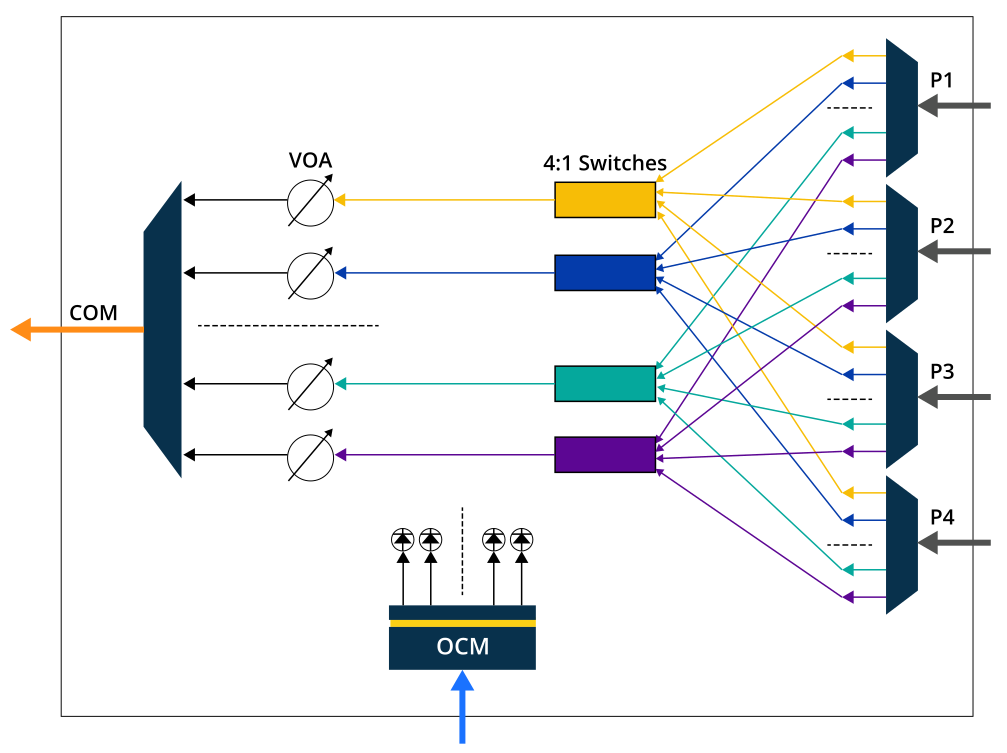
Benefits of ROADMs in Optical Networks
ROADMs bring significant value to network operators and enterprises by enabling:
- Flexibility – Rapidly adapt to changing traffic demands with on-demand wavelength reconfiguration.
- Efficiency – Reduce the need for physical and manual intervention.
- Cost Savings – Lower operational expenses by automating provisioning and fault management.
- Service Agility – Improve time-to-market for new services with faster wavelength assignment.
- Network Resilience – Enhance uptime and service continuity through automated rerouting.
Applications of ROADMs
ROADMs are widely used in:
- Long-Haul Optical Transport – Increasing flexibility in ultra-long-distance backbones.
- Data Center Interconnect (DCI) – Enabling scalable, low-latency connectivity between facilities.
- Metro Networks – Supporting dynamic service delivery for enterprises and service providers.
- AI and Cloud Infrastructure – Providing flexible capacity scaling for GPU clusters and high-performance applications.
Frequently Asked Questions (FAQs)
1. What is the difference between ROADM and OADM?
A traditional Optical Add-Drop Multiplexer (OADM) is static and requires manual configuration to add or drop wavelengths. A ROADM, on the other hand, allows remote, dynamic reconfiguration of wavelengths, significantly improving network flexibility and reducing downtime.
2. What are CDC-ROADMs and why are they important?
CDC (Colorless, Directionless, Contentionless) ROADMs represent the latest generation of reconfigurable multiplexers, and they are essential in large-scale, multi-vendor, high-capacity networks.
- Colorless: Any wavelength can be added/dropped on any port.
- Directionless: Wavelengths can be routed to any direction without physical changes.
- Contentionless: Multiple identical wavelengths can coexist without conflict.
3. Why are ROADMs important for data center interconnects?
Data centers need high-capacity, low-latency links that can be scaled dynamically. ROADMs allow operators to quickly reconfigure optical paths between sites, enabling flexible expansion and rapid deployment of new services.
4. How do ROADMs contribute to network resiliency?
ROADMs enable automatic rerouting of traffic in case of fiber cut or equipment failure. By dynamically reconfiguring wavelength routes, they minimize downtime and help maintain SLAs (Service Level Agreements).
5. Are ROADMs compatible with open optical networking?
Yes. Modern ROADMs are designed to work within open optical network architectures, supporting interoperability across multiple vendors and ensuring flexibility in infrastructure investments.