


Blog
Dense Wavelength Division Multiplexing (DWDM) is an advanced fiber-optic transmission technology that enables the simultaneous transport of multiple data streams over a single optical fiber. Each data stream is carried on a unique wavelength (or channel), dramatically increasing fiber capacity without the need for additional fiber cables.
DWDM is the foundation of modern long-haul, metro, and data center interconnect networks, supporting the massive growth of cloud services, video streaming, and AI-driven workloads.

DWDM operates by combining (multiplexing) several wavelengths into one optical signal for transmission and then separating them (demultiplexing) at the receiving end. Each wavelength carries independent data, which may include Ethernet, OTN, Fibre Channel, or SDH/SONET services.
Key elements of a DWDM system include:
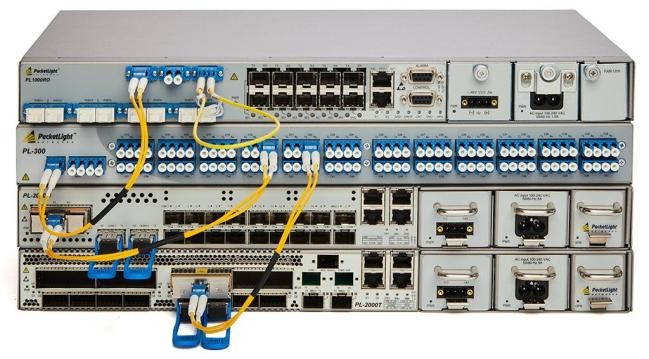
DWDM is deployed across a wide range of use cases, including:
DWDM delivers massive capacity and flexibility and integration requires precise optical engineering. Operators must ensure signal quality, manage optical impairments, and implement monitoring for service-level assurance. Automation and advanced network management platforms simplify deployment and reduce operational complexity.
CWDM (Coarse Wavelength Division Multiplexing) uses fewer, more widely spaced channels and is best suited for shorter distances. DWDM packs more channels into the same fiber with tighter spacing, supporting higher capacity and longer-haul transmission.
DWDM is protocol-agnostic, supporting Ethernet, OTN, Fibre Channel, SONET/SDH, and video services simultaneously over a single optical infrastructure.
Yes. DWDM systems are designed to scale, supporting upgrades from 10G to 400G and 800G wavelengths, ensuring long-term investment protection.
With the use of optical amplifiers and dispersion compensation, DWDM networks can span thousands of kilometers without electrical regeneration, making them ideal for long-haul and submarine networks.
Data centers require ultra-high capacity and low latency to handle massive workloads. DWDM provides the scalability and flexibility to interconnect facilities efficiently while ensuring service reliability.


